
Introduction
This case study invites students to step into a real-world public health challenge: responding to a local surge of invasive mosquitoes and evaluating strategies to protect community health. Students will consider diverse stakeholder perspectives as they explore vector-borne diseases, ecological trade-offs, and the science behind Wolbachia-based mosquito control. The activity is designed to support discussion, decision-making, and systems-level thinking—skills central to modern STEM and public health education.
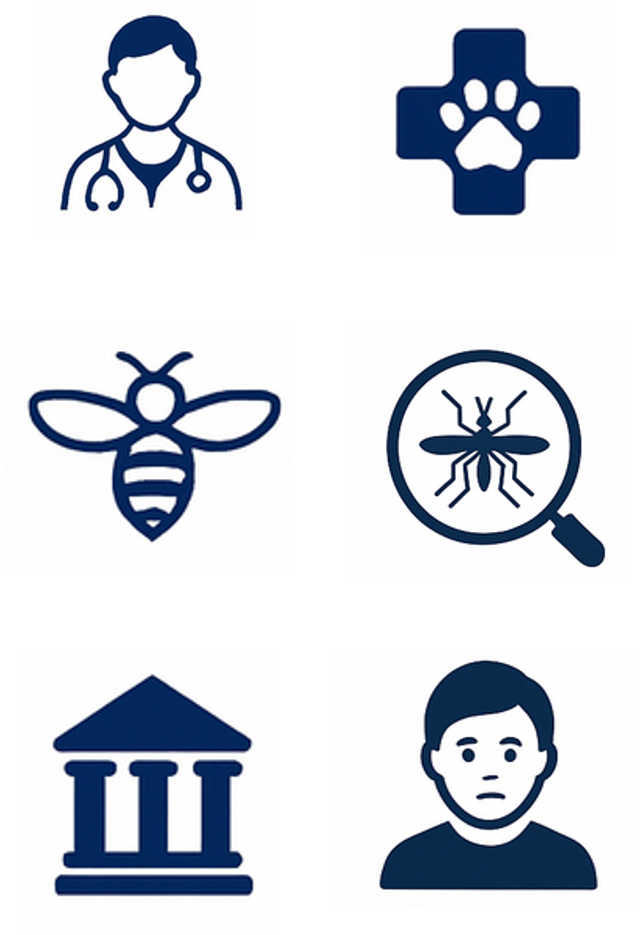
Case Study
Over the past two months, reports have confirmed an alarming surge of Aedes aegypti and Aedes albopictus mosquitoes—invasive species known to transmit diseases such as dengue, Zika, West Nile, and chikungunya—throughout your community. A young child has just been hospitalized with high fever and severe joint pain, symptoms consistent with dengue fever. Her case, along with several other suspected locally acquired cases, has the entire city on high alert. Concerned parents are demanding that the city use chemical insecticides to eliminate the invasive mosquitoes. In response, your community is assembling a rapid-response team of scientists, healthcare workers, and citizens to evaluate strategies for mosquito control. Among the proposed interventions are two innovative Wolbachia-based approaches: population replacement and population suppression.
Recommended background videos:
- PBS Terra (2025). Human Footprint: I Visited a Mosquito Factory (S2 Ep2).
- HHMI Tangled Bank Studios (2024). Wild Hope: Birds on the Brink (Ep17).